
Whisky Neat vs On the Rocks vs With Water: What's the Difference?
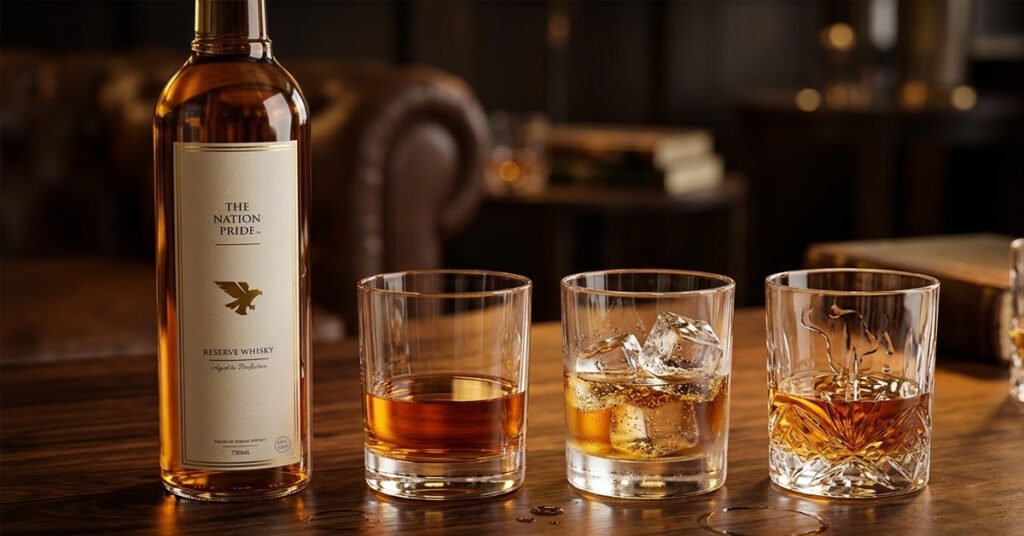
A choice of how to drink whisky is one of the factors that will significantly influence the way you’ll experience this drink. Some people choose to have their whisky neat, whereas others go for an iced one. And many whisky lovers even add a drop of water to discover new aromas and tastes. This means that learning about neat whisky vs on the rocks and whisky with water is necessary to determine what way of consumption suits your taste.
Even though all three ways imply the same spirit to be consumed, they offer unique sensations. It is due to such factors as temperature, dilution, perception of the aroma and taste. Moreover, the type of the glass used, the quality of the ice cubes and the quantity of water used can influence the final result.
Here is a guide on how to drink neat whisky, whisky on the rocks and whisky with water. Besides, it tells the science behind the dilution process, mistakes made by people when drinking whisky, tasting techniques and useful tips for newcomers.
1. What Is Neat Whisky in the Neat vs On the Rocks Comparison?
Serving your whisky neat means that you pour it straight out of the bottle into the glass without any ice, water or anything else. It gives you a chance to taste the whisky in its purest form – as it was bottled.
Mostly, people drink neat whisky at room temperature. Still, the exact temperature might depend on the environment and the way how you store it.
How Does Neat Whisky Taste Without Ice or Water?
There is no way for you to dilute the original taste of the whisky while drinking it neat, which means that you might find a number of distinctive features of it.
- Aroma: You get an opportunity to appreciate the natural aroma of your whisky with fruits, vanilla, oak and spices.
- Flavour: The original flavour of the whisky stays intact.
- Texture: You get the natural texture and body of your whisky.
- Alcohol feeling: You might find more pronounced alcohol taste, especially with high-proof whiskies.
But each whisky has its own unique taste depending on the grains, fermentation, distillation and maturation process.
Why Do Whisky Lovers Prefer Drinking Whisky Neat?
Neat consumption is the preferred choice of many whisky lovers since they want to discover the true nature of their drink. For instance, when one tastes a whisky straight without any addition, they can easily distinguish its smell, flavor profile, and finish.
Nonetheless, straight consumption creates a level playing field that allows drinkers to compare different types of whiskies. However, this does not mean that it makes one whisky superior to others.
2. What Does Whisky on the Rocks Mean?
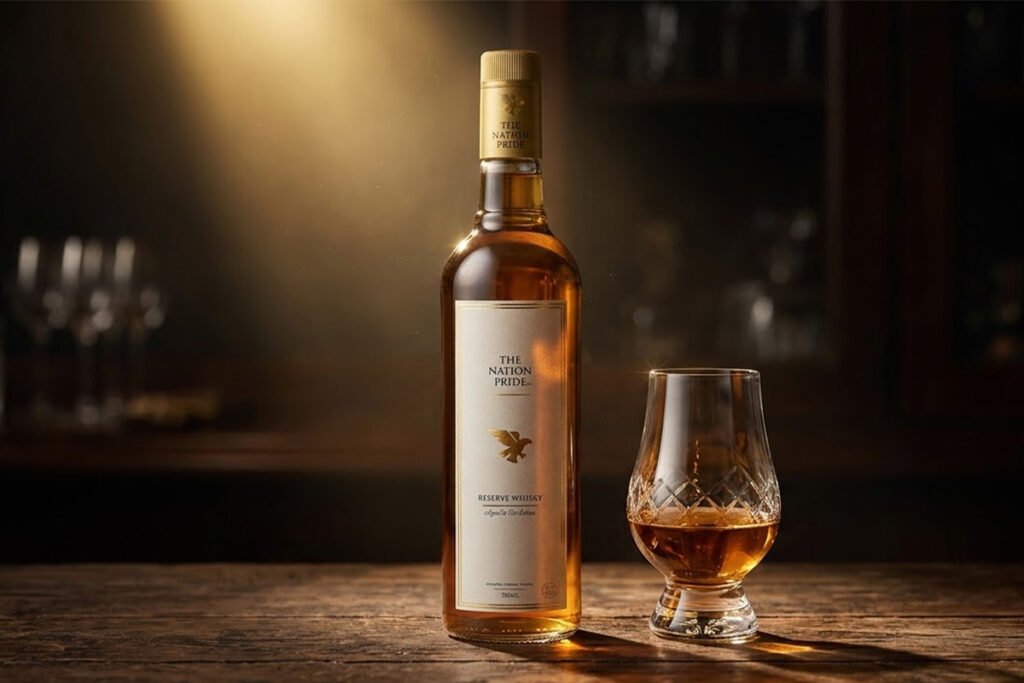
Whisky on the rocks is defined as serving whisky with ice cubes. This refers to an increasingly common way of serving whisky where ice cools the spirit, while slowly melting into it.
In contrast to neat whisky, it involves altering the temperature of the drink as well as the spirit’s alcohol content.
How Does Ice Impact The Taste Of Whisky?
The effect of ice on the whisky can be broadly summarized into two aspects – chilling and dilution.
At first, the cooler temperature alters perception of particular flavors and aromas, hence making some of them less distinguishable.
Second, the process of melting ice leads to the dilution of whisky, meaning that its alcohol content is reduced by the ice.
Moreover, the extent of dilution depends on various parameters:
- The size and shape of the ice cubes.
- The initial temperature of the whisky.
- The temperature of the glass.
- The room temperature.
- The time interval between pouring and drinking the whisky.
Hence, a glass of whisky served over the ice will have a different flavor than the same whisky poured into the glass a few minutes ago.
Why Do Some People Prefer Whisky on the Rocks?
Some people prefer cold whisky due to its refreshing quality. Moreover, ice can make the alcohol taste smoother for some consumers.
However, low temperatures may hinder the ability to smell certain scents, thus affecting the experience.
3. What Does It Mean To Add Water To Whisky?
The adding of water to the whisky means that some water should be added directly to the beverage. However, this method differs from the mixing of the whisky with ice because it allows for better control of dilution.
Generally, only a few drops or splash of water is added.
How Does Water Influence the Taste of Whisky?
Water alters the content of alcohol and other flavor substances present in whisky. As a result, it makes its smell and taste more recognizable for some individuals.
For instance, the intense feeling of alcohol in the drink will decrease after the addition of some water. On the other hand, there can be increased recognition of such flavors as fruitiness, florality, and spiciness.
However, the outcome depends on both the composition of whisky and water used.
How Much Water Do You Add to Whisky?
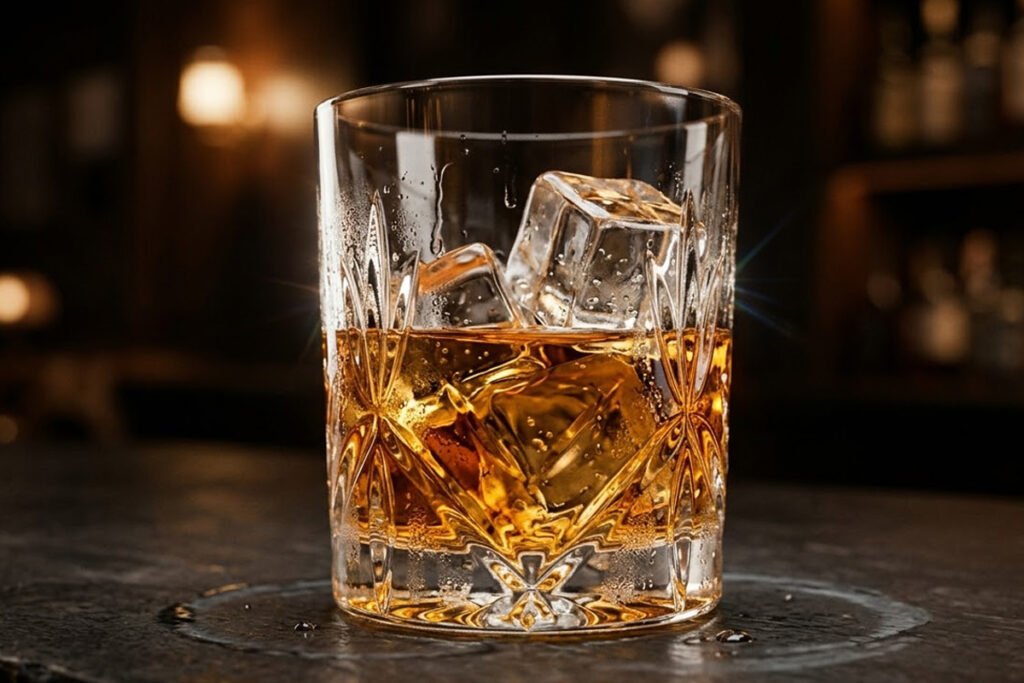
A standard measurement does not apply to all whiskies. The way to go is to begin with only a few drops and then assess its effects.
Try doing this:
- Pour some whisky into an empty glass.
- Smell it without putting anything else into it.
- Take a tiny sip of it if you want to taste it.
- Put two or three drops of still water into it.
- Swirl it slightly.
- Take note of any changes in scent and taste.
More water can also be added later on for comparison purposes.
4. Whisky Neat vs On the Rocks vs With Water: Key Differences
Although these three serving styles use the same spirit, they offer different sensory experiences. Therefore, understanding their differences can help you make an informed choice.
| Feature | Whisky Neat | Whisky on the Rocks | Whisky with Water |
|---|---|---|---|
| Serving method | Without additions | Served over ice | Mixed with a little water |
| Temperature | Usually room temperature | Chilled | Usually room temperature |
| Dilution | No additional dilution | Increases as ice melts | Controlled by added water |
| Aroma | Undiluted aroma profile | Some aromas may become less noticeable | Certain aromas may become more noticeable |
| Flavour perception | Concentrated | Chilled and gradually diluted | Changes with water quantity |
| Alcohol sensation | Often more noticeable | Can feel softer as it cools and dilutes | May feel less intense |
| Control over dilution | No additional dilution | Depends on melting ice | More precise |
| Main characteristic | Original serving | Cooling effect | Adjustable dilution |
Importantly, none of these serving methods is universally superior. Your preference, the whisky’s characteristics and the tasting environment all matter.
5. Whisky Neat vs On the Rocks: How Temperature Changes the Experience
The temperature has a big impact on the way people experience their whisky. First of all, it affects the release of aromas, taste, and mouthfeel.
Room Temperature Compared to Chilled Whisky
Whisky at room temperature usually tends to release aromas better compared to chilled whisky. This means that you can detect more aromatic properties of your drink.
However, chilled whisky may have a smooth texture and may taste less strong.
Why Is Cold Whisky Smell Different?
The characteristics of the aromatic compounds change according to the temperature. The low temperature may lower the volatility, hence fewer molecules for smelling.
This implies that whisky taken cold will smell differently than the one taken without the ice.
However, this does not imply that the whisky changes the characteristics upon being cooled.
6. How Does Adding Water Impact Whisky’s Aroma and Taste?
Adding water to whisky is not just about weakening the drink. Sometimes, water changes the way the flavours interact with our senses.
The Chemistry of Whisky and Water
Whisky consists of alcohol, water, and many other flavourings. They appear in whisky due to the raw materials used, fermentation, distillation, maturation, and blending.
By adding more water, you change the total composition of the whisky. As a result, the ratio between the impact of alcohol and other flavors changes.
In this case, some people feel fruity or sweet aromas in the smell. Other consumers prefer drinking whisky without diluting it.
Will Adding Water Smooth Whisky Out?
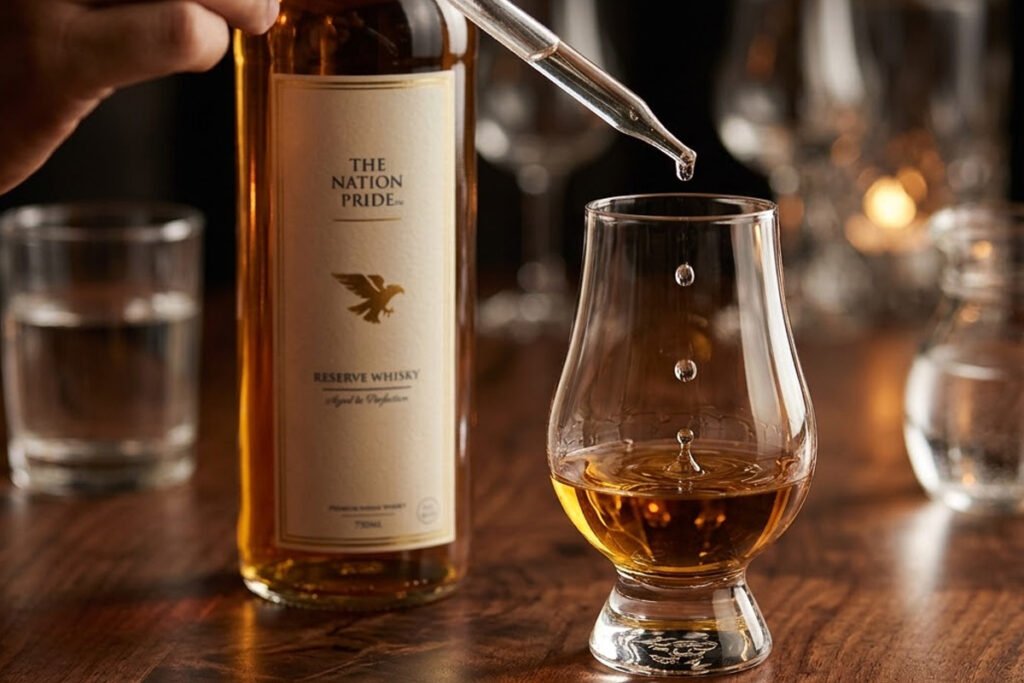
Water will dilute the alcohol content in the serving. Hence, there won’t be much of a burning effect felt immediately.
But smoothness is a very subjective experience. Factors like the whisky’s alcohol content and its flavor profile play a role.
Thus, you should try out smaller amounts of water instead of increasing it.
7. Whisky on the Rocks: Large vs Small Ice Cubes
The difference lies in that the size of the ice will determine the rate of melting and cooling.
Large Ice Cubes
Large ice cubes have a lower surface-area-to-volume ratio compared to several small cubes having the same total volume. As a result, they can melt slowly under the same conditions.
It is suitable for those who love to have their drinks served cold while minimizing the dilution process.
Small Ice Cubes
Small ice cubes have high surface area in comparison to their volume. As a result, they can cool the whiskey quickly but will bring in water more easily.
Crushed ice cubes can also be used as they can melt fast due to their high exposed surface area.
Which Ice Is Better for Whisky on the Rocks?
The choice is not straightforward and depends on your expectations.
- Large cubes: Helpful if dilution occurs slowly.
- Small cubes: Good for fast cooling of the drink.
- Crushed ice: Results in quick cooling and fast dilution.
If you want to have pure taste, it is best to use fresh ice made of clean water.
8. Whisky Neat vs On the Rocks: How Temperature Changes the Experience
Different glasses can impact the concentration of aroma, temperature and tasting itself. In such a way, using a proper glass is essential to enhance the process.
Glencairn Glass for Neat Whisky
The Glencairn glass has a broad bowl and narrow opening that facilitates aroma concentration near the opening. Thus, the glass is convenient to investigate aromatic features of whisky.
Tumbler Glass for Whisky on the Rocks
Tumbler glass usually has wide opening and strong bottom that provides a convenient room for ice cubes and easy stirring.
In addition, due to its practicality, it is often used for cold whisky serving.
Tulip Glass for Whisky with Water
The use of tulip tasting glass is helpful in observing aroma changes when water is added to the whisky. Moreover, narrow opening directs the aromas towards your nose.
Overall, you do not need to invest much money into fancy glasses to drink whisky. A proper glass is sufficient.
9. How to Compare Whisky Neat vs On the Rocks vs With Water
Just comparing these methods can give you insight into how they vary from each other.
However, do not forget that you should not drink a lot of water during this process but rather focus more on observation.
Step 1: Examine the Whisky
Start by examining the whisky in the glass. Notice the color and appearance of the whisky in natural light.
Do not make the mistake of assuming that the color of the whisky says anything about the age or quality of the whisky.
Step 2: Smell the Whisky
Smell the whisky slowly by bringing the glass to your nose. Try to recognize features of the smell, such as fruits, vanilla, spices, wood, flowers, etc.
Don’t sniff very deeply into the glass, particularly strong whisky, as the alcohol will interfere with the process.
Step 3: Investigate the Neat Serving
Take note of the original smell and taste of the whisky without putting ice or water into it. Pay special attention to its initial taste and the aftertaste.
Step 4: Investigate the Chilled Serving
Make another small serving but chilled. Recognize the differences brought by the cold smell, temperature, and taste.
Step 5: How to Investigate Whisky Neat vs On the Rocks with Water?
Finally, pour several drops of still water into the whisky. Investigate whether the smell and taste became easier to recognize.
10. Common Mistakes When Serving Whisky Neat or on the Rocks
Sometimes even the good whisky can spoil the effect when it is served improperly. But there are a number of techniques that will help you to avoid common errors.
The Excess Water
Too much water will cause excessive dilution of the drink. That is why you should start using it in small quantities rather than pouring in a lot of it at once.
Bad Quality Ice Cubes
The ice cubes can affect the whole process of service. For this reason you need to use fresh ice cubes, which are prepared with safe water.
Serving Whisky too Cold
The low temperature can weaken the perception of some aroma components. As a result some specific tastes can be undetected.
The Improper Glass
The uncomfortable or too small glass may spoil your enjoyment. For this reason you should choose the glass according to your preferences of service.
Believing That One Technique Is the Best One
Many people think that neat whisky is the only correct way of service. But the individual preferences and features of each whisky are more important than the rules.
11. Does Whisky Type Affect Neat vs On the Rocks Serving?
Whisky styles are likely to react to temperature and dilution in different ways, so perhaps the choice depends on the whisky style itself.
Blended Whisky
The blend of several whiskies is what makes blended whisky taste so good. Depending on the blend, you can try it neat, with ice or with some water.
Single Malt Whisky
A whisky from one distillery and using only malted barley as a grain is called single malt whisky. Single malt whisky aromas and tastes greatly differ depending on the process of manufacture and aging.
Most people start tasting single malt whisky neat and then use water.
Reserve Whisky
The term ‘reserve’ when applied to a bottle of whisky is an open definition that can differ from one distillery to another.
Therefore, study the features of the specific drink before deciding on how to serve it.
High-ABV Whisky
Whisky containing higher amounts of alcohol might give a strong sense of alcohol.
Hence, there are drinkers who tend to add some water into the whisky to understand better its taste.
Nevertheless, the right amount will depend on personal preference.
12. Whisky Neat vs On the Rocks: Which Is Better for Beginners?
It’s common for beginners to ask which serving style serves as the best starting point. But the answer is not always clear.
Neat whisky may assist beginners in discovering the initial flavor concentration of the spirit. Ice, on the contrary, is another component that gives a cooler ambience.
The addition of a bit of water is another alternative since it allows for gradual adaptation.
Here are the distinctions between all three for a beginner’s perspective:
- Neat: Assists in discovering the original profile.
- On the rocks: Incorporates a cooler and gradual dilution.
- With water: Gives gradual dilution.
However, it is important for beginners to remember that whisky contains alcohol. People who choose to consume whisky should abide by the laws concerning the legal drinking age.
13. How to Choose Between Whisky Neat vs On the Rocks
This matter is dependent on your personal preferences and experience.
Take into account the following criteria before you make a decision:
1. The preference of the taste: if you like original flavoring, you may choose neat serving.
2. Temperature preferences: if you prefer your drinks to be chilled, then whisky on the rocks will meet your requirements.
3. Preference to dilute: if you want to see the difference in aromas and flavors, some drops of water give more options.
4. Alcohol strength of the drink: the high-strength whisky is perceived more vividly. Thus, a drop of water will affect the result.
5. Occasion: depending on the atmosphere and whisky you consume, your choice of the way to drink can vary.
In general, the best way is to understand each of the methods and not to rely on the preference of another person.
14. Frequently Asked Questions About Whisky Neat vs On the Rocks
Q1. What is the difference between whisky neat and whisky on the rocks?
There is no ice or water in the whisky neat. However, whisky on the rocks consists of ice cubes. As a result, whisky on the rocks becomes colder due to the melting ice cubes.
Q2. Is Whisky Neat vs On the Rocks Better Than Whisky with Water?
There is no one universal way to serve whisky that is better than another. Whisky neat keeps its initial strength. On the contrary, adding water alters the alcohol content.
Q3. Will the presence of water smooth whisky?
The addition of water to whisky can reduce alcohol content in the drink and reduce the effect of alcohol in it. However, the results of adding water to whisky differ according to types of whisky and amounts of water.
Q4. Why Is Ice Used in Whisky Neat vs On the Rocks?
Adding ice reduces the temperature of the drink so that one can consume a cool drink. Besides, ice also helps to dilute the whisky.
Q5. Is it possible to drink single malt whisky with water?
Yes. A few drops of still water can be added to single malt whisky according to individual taste. It will affect the taste of the whisky.
Q6. What is meant by “whisky on the rocks”?
“Whisky on the rocks” means that there are some ice cubes put in the whisky. The ice cube will cool the drink and give it additional water.
Q7. Does the presence of ice lower the alcohol content in the whisky?
Yes. Ice adds water to the drink during the process of melting. As a result, the level of alcohol percentage will be decreased.
Q8. How Much Water Should You Add in Whisky Neat vs On the Rocks?
Add two or three drops and evaluate how it turned out. After that, you can add more water to whisky gradually.
Q9. Which glass is recommended for having whisky on its own?
Glencairn glass or tulip glass will be good to study the aromas of whisky. Nonetheless, a clean glass may also do fine.
Q10. Will Ice Affect the Taste in Whisky Neat vs On the Rocks?
Yes. Addition of ice will cause a reduction in temperature and addition of water due to melting.
Conclusion: Whisky Neat vs On the Rocks vs With Water
Learning about the distinction between neat, on the rocks, and whisky with water makes it possible for you to learn about how consumption influences the overall tasting experience. Even though all three methods use the same spirit, they differ in temperature and dilution.
While neat whisky is the one without any dilution, ice offers a chilled drink which alters with time due to melting. Meanwhile, adding water gives you more possibilities to manipulate dilution and discover different aromas.
Glass, ice, alcohol percentage, and individual taste preferences come into play too. This means that there is no one way to enjoy whisky.
The bottom line is understanding the distinctions and making the right decisions. Follow the guidelines on alcohol consumption in your area, knowing that you can choose not to drink at all.
